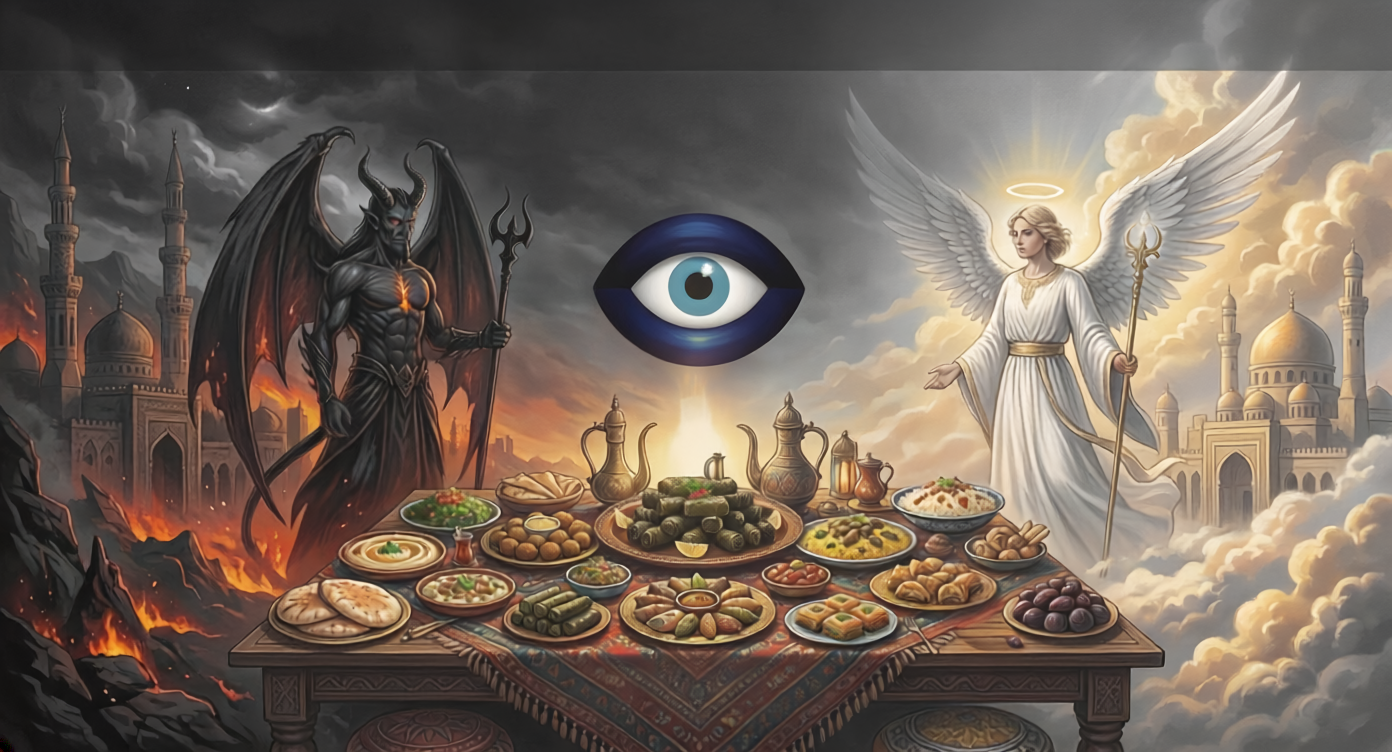
"The ancient lands of the Mediterranean and Middle East have fed humanity for ten thousand years — yet their tables are too often kept separate, divided by borders drawn in ink."
The Turquoise Table was born from a simple, radical idea: what if we gathered them all together? What if we let the Turkish dolma sit beside the Greek dolmadakia, let the Armenian tolma share a plate with the Iranian dolmeh? What if we let the food speak — and let it reveal what our politics cannot: that we are, at the table, one people.
Saints & Sinners, United by Food
Every culture has its sacred and its sinful. Its temple food and its street food. Its grandmother's careful hands and its midnight indulgences. We celebrate both — the smoky kofta of the sinners and the herb-kissed dolmas of the saints.
The glowing turquoise fountain at our center represents the ancient sacred eye — the nazar — that has watched over these lands since before memory. It is protection and mystery, the point where all things meet.
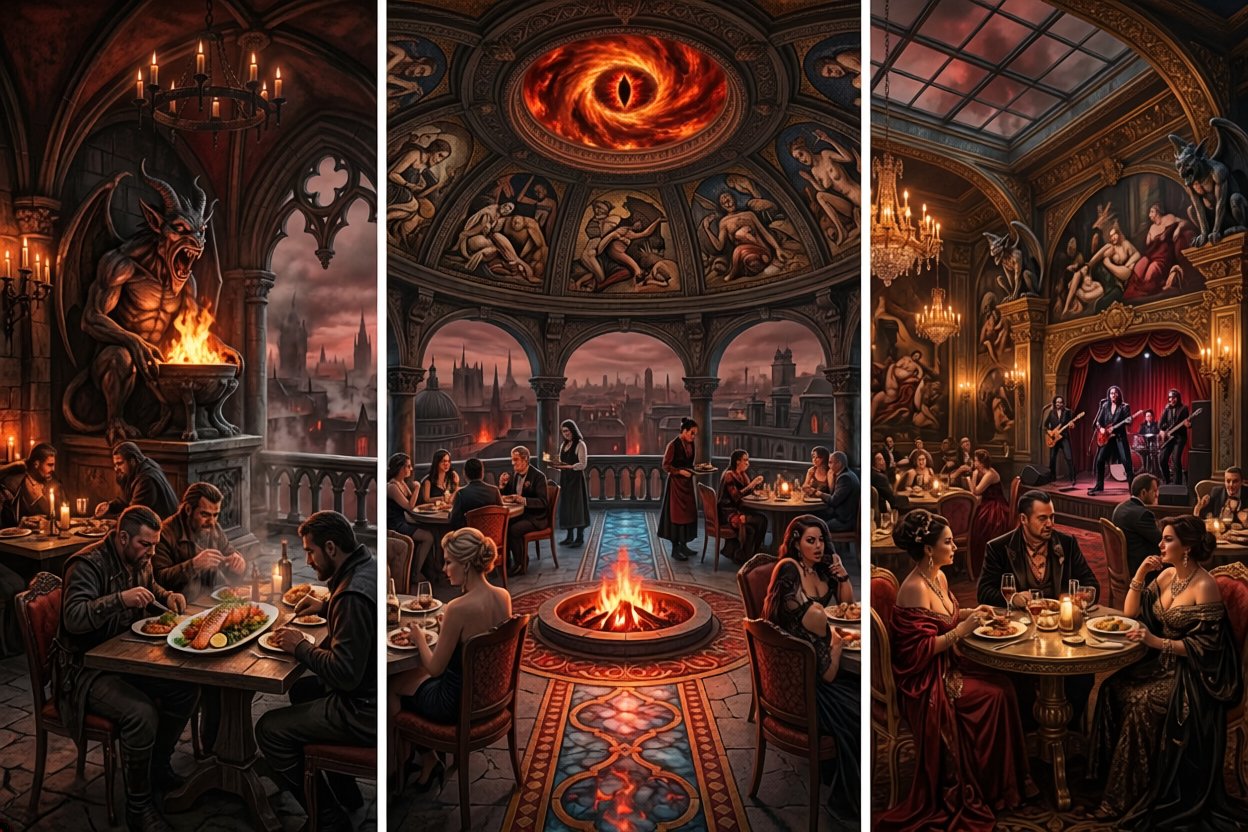
A Hall Divided by Design, United by Purpose
The sinners' wing glows dark and warm — carved stone, candlelight, the flicker of fire. The saints' sanctuary opens to marble arches, cloud-light, and celestial murals. At the center: the turquoise fountain, where both sides meet, and where every meal begins.
We invite you to choose your side. Or to sit in the middle and belong to both.

"The table is the only place where enemies have always been willing to sit together."— The Philosophy of The Turquoise Table

Ten Nations. One Table.
The cultures whose recipes, traditions, and souls live in our kitchen.
Dolma, börek, manti, kofte
Explore →Dolmadakia, tzatziki, spanakopita
Explore →Warak dawali, mezze, kibbeh
Explore →Warak dawali, shawarma, fattoush
Explore →Warak dawali, musakhan, maqluba
Explore →Dolmeh barg-e mo, ghormeh sabzi
Explore →Tolma, sarma, manti, lahmajoun
Explore →Mahshi waraq enab, koshari, ful
Explore →Dolma, masgouf, tepsi baytinijan
Explore →Shared Levantine tradition, shakshuka
Explore →